

The Hidden Waste Problem in Fashion (And What Happens to Unsold Clothing)
A closer look at fashion’s hidden waste problem and the fate of unsold clothing. From overproduction to landfill, this article explores the scale of the issue and why a circular approach is no longer optional.
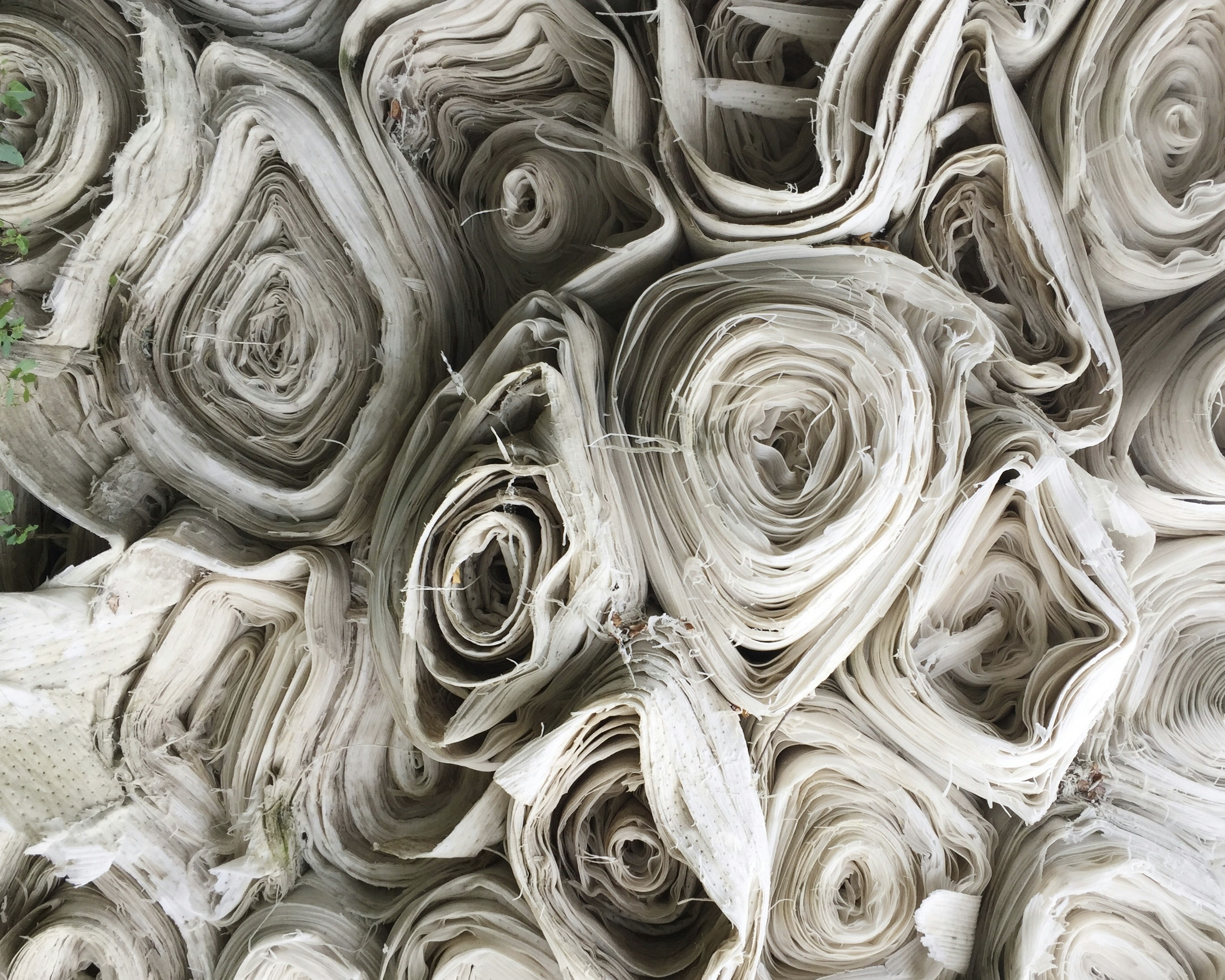
Fashion is designed to be seen at its best.
Collections are presented as complete. Finished. Resolved.
What remains unseen is everything that does not make it there.
Each year, billions of garments are produced beyond what can realistically be sold. Not as an error, but as part of how the system functions.
According to the Ellen MacArthur Foundation, the equivalent of one garbage truck of textiles is landfilled or burned every second. This is not driven by scarcity, but by excess.
Before a garment is ever worn, it is already at risk of becoming waste.
The Business of Overproduction
Fashion operates on prediction.
Brands forecast demand months in advance, producing at volumes that ensure availability across markets, channels, and seasons.
To avoid missed sales, they produce more than needed.
Analysis from the Business of Fashion highlights how this model consistently results in overproduction, with a significant percentage of inventory left unsold each season.
This surplus is not an exception. It is built into the economics of the industry.
Producing less carries risk. Producing more guarantees waste.
What Actually Happens to Unsold Clothing
Unsold garments move through a system that is rarely visible to the consumer.
Some are discounted repeatedly, moving through cycles of markdowns until they are cleared. This normalises overconsumption and lowers the perceived value of clothing over time.
Some are redirected into off-price retail or secondary markets.
Some are exported in bulk.
The OR Foundation, working in Ghana’s Kantamanto Market, documents how millions of second-hand garments arrive weekly. A large portion cannot be resold due to quality or volume, and ends up as waste, placing pressure on local infrastructure.
Some are destroyed.
A widely reported case involving Burberry revealed the incineration of unsold goods to protect brand positioning. While policies have since shifted, the practice exposed how value is often prioritised over resource preservation.
And a significant volume is sent directly to landfill.
According to the United States Environmental Protection Agency, millions of tonnes of textiles are discarded annually, with the majority ending up in landfill rather than being recovered.
The Limits of Recycling
Recycling is frequently presented as a solution. In practice, its impact remains limited.
Data from the European Environment Agency shows that less than 1 percent of textiles are recycled into new garments.
Most materials are downcycled into lower-value uses, such as insulation or industrial filling. Once in this state, they are far less likely to re-enter the fashion system.
This means that for the vast majority of garments, disposal is not a delay. It is an endpoint.
The Speed Problem
Production is only part of the issue. The rate at which clothing is replaced accelerates it.
The Ellen MacArthur Foundation reports a significant decline in the number of times a garment is worn compared to 15 years ago.
More collections. Faster cycles. Lower prices.
Clothing moves quickly from purchase to discard, often long before its physical life is over.
This compresses the lifecycle of each piece and multiplies waste at scale.
A Structural Issue
It is easy to frame this as a consumer problem. In reality, it is systemic.
The current model rewards volume, speed, and constant newness.
Research from the Ellen MacArthur Foundation emphasises that reducing fashion’s environmental impact requires changes at the design and production level, not just shifts in consumer behaviour.
This includes producing fewer garments, extending product lifecycles, and rethinking what happens after a piece is sold.
Moving Toward Circularity
Addressing waste requires a shift from a linear model to a circular one.
A system where materials are not discarded after use, but continuously reworked, reused, and reintegrated.
At Pearl Moon Flower, this is approached through both creation and continuation.
Garments are designed with longevity in mind, constructed to be worn, adjusted, and kept over time. Alongside this, existing pieces are reworked through upcycling, transforming materials that might otherwise be discarded into new forms.
In the long term, these two approaches meet.
Pieces are not only made to last, but to return. To be reimagined again after years of wear, extending their lifecycle beyond a single use phase.
This is not about eliminating new design. It is about ensuring that creation does not lead to accumulation without purpose.
Rethinking Value
The waste problem in fashion is not only about quantity. It is about how clothing is perceived.
When garments are treated as temporary, they are easily replaced.
Shifting this requires a different definition of value. One that considers durability, craftsmanship, and the potential for a piece to evolve over time.
Fewer garments. Greater intention. Longer use.
Fashion’s waste problem does not sit on the surface.
It exists in what is overproduced, overlooked, and eventually discarded.
Understanding it means looking beyond what is presented, and paying attention to what happens after.
Because what happens after is where the real cost lies.
— Pearl Moon Flower Journal